
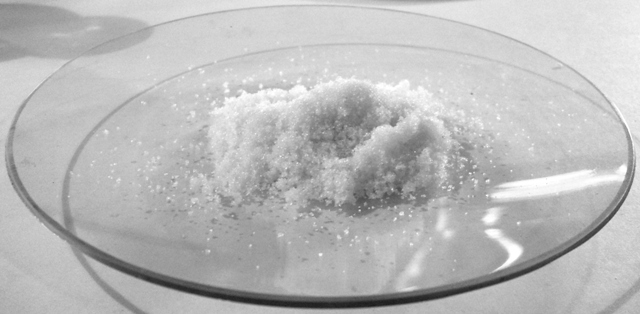
E503
E503 - Ammoniumcarbonate
✅ Risikostufe: Sicher • Acidity Regulator
Über diesen Zusatzstoff
Herkunft
Ammoniumcarbonate (E503) sind eine Gruppe chemischer Verbindungen mit der Formel (NH₄)₂CO₃, einschließlich verwandter Spezies wie Ammoniumbicarbonat (NH₄HCO₃) und Ammoniumcarbamat (NH₂COONH₄). Sie werden synthetisch durch die Kombination von Kohlendioxid und Ammoniak hergestellt. Historisch wurden sie durch die Destillation von stickstoffhaltigem organischem Material wie Hörnern gewonnen, daher die Namen „Bäckerammoniak“ oder „Hirschhornsalz“.Verwendung
In der Lebensmittelindustrie werden Ammoniumcarbonate hauptsächlich als Backtriebmittel verwendet. Sie zersetzen sich beim Erhitzen zu gasförmigem Ammoniak, Kohlendioxid und Wasser, wodurch der Teig aufgeht. Dies ist besonders nützlich bei Backwaren, bei denen eine knusprige Textur gewünscht ist, wie Keksen, Crackern und einigen Brotsorten. Im Gegensatz zu Backpulver oder Natron hinterlassen Ammoniumcarbonate keine alkalischen Rückstände, die den Geschmack und die Farbe des Endprodukts beeinträchtigen können. Sie werden auch als Puffermittel und pH-Regulator eingesetzt. Die Verwendung ist begrenzt, da ein Ammoniakgeruch im Endprodukt verbleiben kann, wenn es nicht richtig gebacken wird.Nebenwirkungen
Ammoniumcarbonate gelten im Allgemeinen als sicher für den Verzehr in kleinen Mengen. Ein übermäßiger Verzehr kann jedoch zu Reizungen des Verdauungstrakts führen. Aufgrund des Ammoniakgehalts können empfindliche Personen bei Exposition gegenüber hohen Konzentrationen des Pulvers oder der Dämpfe leichte Atemwegsreizungen erfahren. Es gibt keinen festgelegten ADI (Acceptable Daily Intake) für Ammoniumcarbonate, aber gute Herstellungspraktiken schreiben vor, dass die verwendete Menge auf das Minimum beschränkt werden sollte, das zur Erzielung des gewünschten Effekts erforderlich ist.Regulierungsstatus
Ammoniumcarbonate (E503) sind in vielen Ländern, einschließlich der Europäischen Union, als Lebensmittelzusatzstoff zugelassen. Vorschriften legen die Verwendungsbedingungen und Höchstmengen in bestimmten Lebensmittelkategorien fest. In den Vereinigten Staaten gilt Ammoniumbicarbonat als allgemein sicher (GRAS), wenn es gemäß guter Herstellungspraxis verwendet wird.Quellen
- 📚 EFSA
- 📚 FDA CFR 21
- 📚 Wikipedia
- 📚 PubChem
Kurzinfos
Typ
Acidity Regulator
Risikostufe
✅ Sicher
Vegan?
✅ Ja
Halal?
✅ Ja