
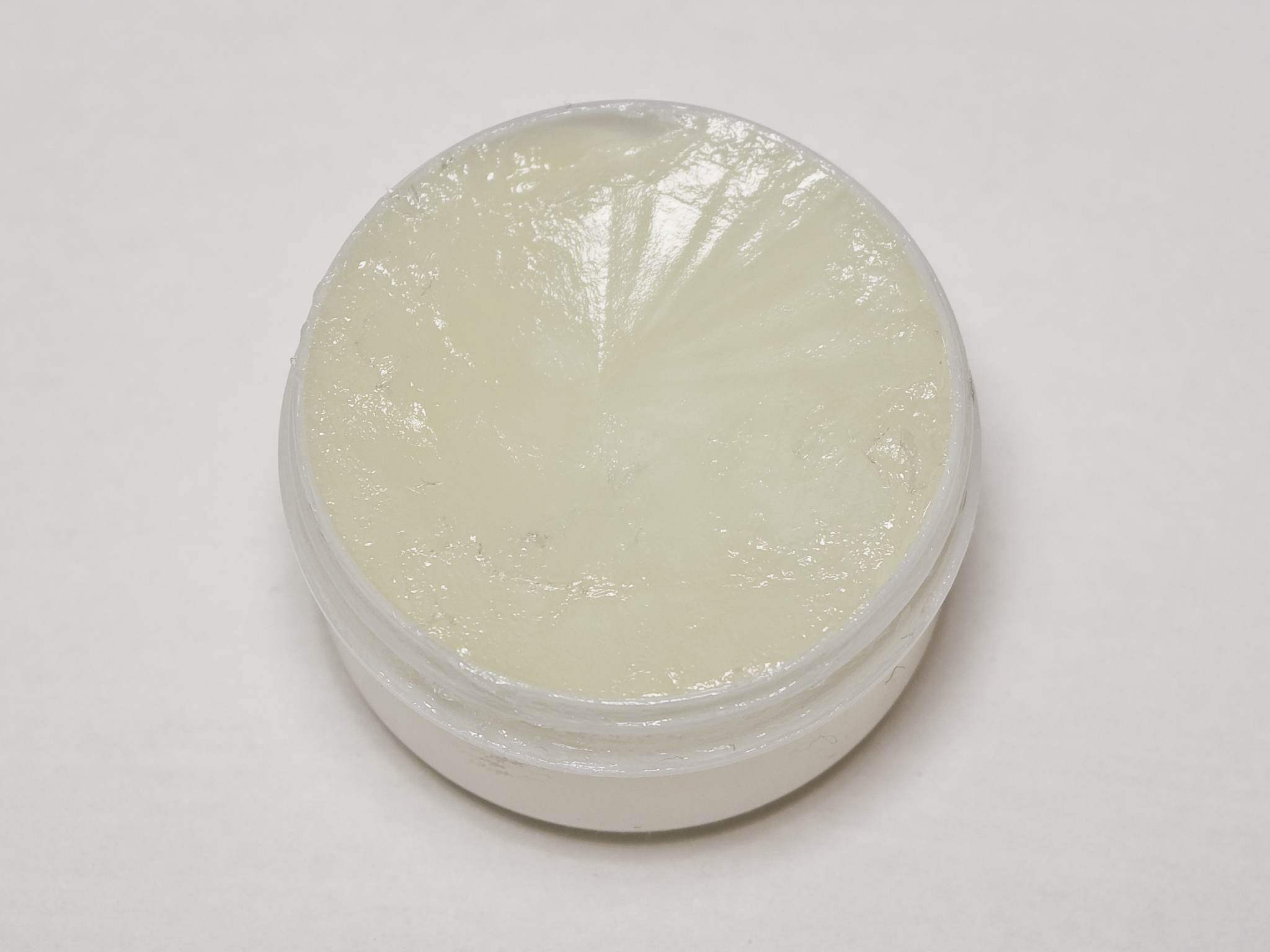
E905B
E905b - Petrolatum
✅ Niveau de Risque: Sûr • Additive
À propos de cet additif
Origine
La vaseline, également connue sous le nom de pétrolatum, est un mélange semi-solide d'hydrocarbures (avec des nombres de carbones principalement supérieurs à 25), initialement promue comme pommade topique pour ses propriétés cicatrisantes. Elle est obtenue à partir du pétrole par déparaffinage de stocks d'huiles lubrifiantes lourdes. Le processus implique la distillation, l'extraction par solvant et l'hydrotraitement pour éliminer les composants indésirables et les impuretés. La substance résultante est un mélange purifié d'huiles minérales et de cires.Utilisation
Dans l'industrie alimentaire, la vaseline (de qualité alimentaire) peut être utilisée comme agent de démoulage, revêtement protecteur, lubrifiant et antimousse. Elle est utilisée sur les moules de cuisson pour éviter qu'ils n'attachent, comme revêtement protecteur pour les fruits et légumes afin de prolonger leur durée de conservation, et comme composant de la base de gomme à mâcher. Elle est également utilisée dans les industries pharmaceutique et cosmétique dans une large gamme de produits, y compris les lotions, les crèmes et les pommades. La FDA réglemente son utilisation en contact direct avec les aliments.Effets secondaires
La vaseline de qualité alimentaire est généralement considérée comme sûre pour ses utilisations prévues. La FDA autorise son utilisation comme additif alimentaire direct sous des conditions spécifiques. Cependant, des préoccupations existent concernant le potentiel de contamination par des hydrocarbures aromatiques polycycliques (HAP) pendant le processus de fabrication. La vaseline hautement raffinée est considérée comme présentant un risque minimal. Aucune DJA (Dose Journalière Admissible) n'a été établie, car elle est utilisée dans le cadre des Bonnes Pratiques de Fabrication (BPF). Une ingestion excessive n'est cependant pas recommandée et peut provoquer des troubles digestifs. Les impuretés peuvent être cancérigènes, mais la vaseline de qualité alimentaire est hautement purifiée pour minimiser ce risque.Statut réglementaire
La vaseline est réglementée par diverses autorités dans le monde entier. Aux États-Unis, la Food and Drug Administration (FDA) autorise son utilisation comme additif alimentaire direct en vertu du 21 CFR 172.880, spécifiant les exigences de pureté. Dans l'Union européenne, elle est autorisée sous des conditions spécifiques et doit répondre à des critères de pureté. L'Autorité européenne de sécurité des aliments (EFSA) a évalué sa sécurité et établi des spécifications pour son utilisation dans les matériaux en contact avec les aliments. Les réglementations garantissent que la vaseline utilisée dans les applications liées à l'alimentation est hautement raffinée et exempte de contaminants nocifs.Sources
- 📚 FDA CFR 21
- 📚 EFSA FEEDAP Panel
- 📚 Wikipedia
- 📚 PubChem
Informations Rapides
Type
Additive
Niveau de Risque
✅ Sûr
Végane?
✅ Oui
Halal?
✅ Oui