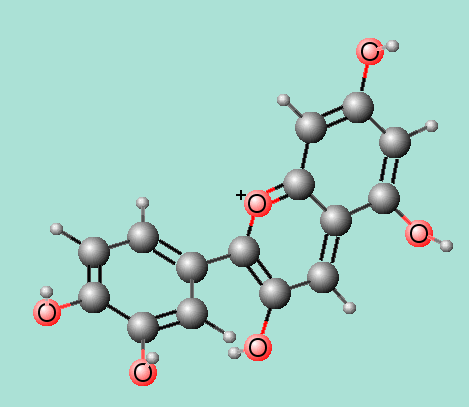
E163E
E163e - Peonidin
✅ Risk Level: Safe • Additive
About this additive
Origin
Peonidin is a naturally occurring anthocyanidin, a type of plant pigment belonging to the flavonoid family. It is found in various fruits, vegetables, and flowers, contributing to their red, purple, and blue colors. Common sources include berries (such as cranberries and blueberries), red grapes, plums, and red onions. Peonidin is extracted from these natural sources for use as a food additive.Usage
As a food additive, peonidin (E163e) is primarily used as a natural food coloring. It provides a range of red and purple hues, depending on the pH and other factors present in the food matrix. It is used in a variety of food products, including beverages, jams, jellies, confectionery, and processed fruits. Peonidin is also being investigated for its potential health benefits due to its antioxidant properties. However, these potential benefits are not the primary reason for its use as a food additive.Side Effects
Anthocyanins, including peonidin, are generally considered safe for consumption. There is no established Acceptable Daily Intake (ADI) specifically for peonidin. Regulatory bodies like the European Food Safety Authority (EFSA) have evaluated anthocyanins as a group and have not identified significant safety concerns at the levels typically consumed in food. However, as with any food additive, some individuals may experience allergic reactions or sensitivities, although these are rare. High doses of anthocyanins may potentially cause gastrointestinal discomfort in sensitive individuals, but this is not a common occurrence at typical consumption levels.Regulatory Status
Peonidin, as part of the E163 (Anthocyanins) group, is permitted for use as a food coloring in the European Union under Regulation (EC) No 1333/2008 on food additives. The specific conditions of use and maximum levels are defined in Annex II of the regulation. In the United States, anthocyanins are generally recognized as safe (GRAS) and are permitted for use as color additives in food, although specific regulations may apply depending on the source and application.Sources
- 📚 EFSA 2013
- 📚 FDA CFR 21
- 📚 Wikipedia
- 📚 PubChem
Quick Facts
Type
Additive
Risk Level
✅ Safe
Vegan?
✅ Yes
Halal?
✅ Yes