
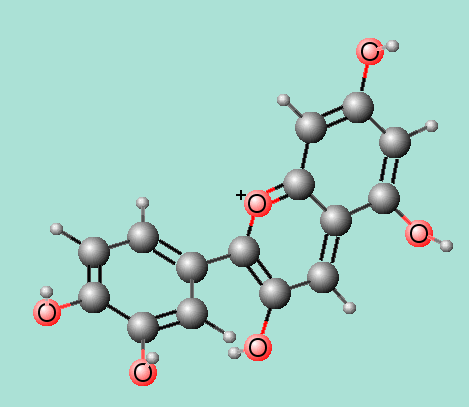
E163e - Peonidin
✅ Risikostufe: Sicher • Additive
Über diesen Zusatzstoff
Herkunft
Peonidin ist ein natürlich vorkommendes Anthocyanidin, ein pflanzliches Pigment aus der Familie der Flavonoide. Es ist in verschiedenen Früchten, Gemüsesorten und Blumen enthalten und trägt zu deren roten, violetten und blauen Farben bei. Häufige Quellen sind Beeren (wie Cranberries und Heidelbeeren), rote Trauben, Pflaumen und rote Zwiebeln. Peonidin wird aus diesen natürlichen Quellen zur Verwendung als Lebensmittelzusatzstoff extrahiert.
Verwendung
Als Lebensmittelzusatzstoff wird Peonidin (E163e) hauptsächlich als natürlicher Lebensmittelfarbstoff verwendet. Es bietet eine Reihe von Rot- und Violetttönen, abhängig vom pH-Wert und anderen Faktoren in der Lebensmittelmatrix. Es wird in einer Vielzahl von Lebensmitteln eingesetzt, darunter Getränke, Konfitüren, Gelees, Süßwaren und verarbeitete Früchte. Peonidin wird auch auf seine potenziellen gesundheitlichen Vorteile aufgrund seiner antioxidativen Eigenschaften untersucht. Diese potenziellen Vorteile sind jedoch nicht der Hauptgrund für seine Verwendung als Lebensmittelzusatzstoff.
Nebenwirkungen
Anthocyane, einschließlich Peonidin, gelten im Allgemeinen als sicher für den Verzehr. Es gibt keinen spezifischen etablierten Akzeptablen Täglichen Aufnahmewert (ADI) für Peonidin. Regulierungsbehörden wie die Europäische Behörde für Lebensmittelsicherheit (EFSA) haben Anthocyane als Gruppe bewertet und keine signifikanten Sicherheitsbedenken bei den typischerweise in Lebensmitteln verzehrten Mengen festgestellt. Wie bei jedem Lebensmittelzusatzstoff können jedoch bei einigen Personen allergische Reaktionen oder Empfindlichkeiten auftreten, obwohl diese selten sind. Hohe Dosen von Anthocyanen können bei empfindlichen Personen möglicherweise Magen-Darm-Beschwerden verursachen, dies ist jedoch bei typischen Verzehrmengen keine häufige Erscheinung.
Regulierungsstatus
Peonidin ist als Teil der Gruppe E163 (Anthocyane) in der Europäischen Union gemäß der Verordnung (EG) Nr. 1333/2008 über Lebensmittelzusatzstoffe als Lebensmittelfarbstoff zugelassen. Die spezifischen Verwendungsbedingungen und Höchstmengen sind in Anhang II der Verordnung festgelegt. In den Vereinigten Staaten gelten Anthocyane als allgemein sicher (GRAS) und sind als Farbstoffzusätze in Lebensmitteln zugelassen, obwohl je nach Quelle und Anwendung spezifische Vorschriften gelten können.
Quellen
- 📚 EFSA 2013
- 📚 FDA CFR 21
- 📚 Wikipedia
- 📚 PubChem