
E450V
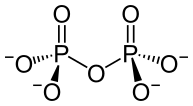
E450v - Tetrakaliumdiphosphat
✅ Risikostufe: Sicher • Additive
Über diesen Zusatzstoff
Herkunft
Tetrakaliumdiphosphat, auch bekannt als Tetrakaliumpyrophosphat (TKPP), ist ein anorganisches Salz, das durch die Neutralisation von Pyrophosphorsäure mit Kaliumhydroxid gebildet wird. Es wird synthetisch hergestellt und kommt in der Natur nicht in nennenswerten Mengen vor. Es gehört zur Familie der Diphosphate, die Salze der Diphosphorsäure sind.Verwendung
TKPP wird in der Lebensmittelindustrie als Puffermittel, Emulgator und Sequestriermittel eingesetzt. Es hilft, den pH-Wert von Lebensmittelprodukten zu stabilisieren und unerwünschte Säureveränderungen zu verhindern. Als Emulgator unterstützt es die Dispersion von Fetten und Ölen in Wasser und erzeugt stabile Emulsionen. Als Sequestriermittel bindet es Metallionen und verhindert, dass diese mit anderen Lebensmittelbestandteilen reagieren und Verfärbungen oder Geschmacksabweichungen verursachen. Es ist häufig in verarbeiteten Fleischprodukten, Meeresfrüchten, Milchprodukten und Backwaren zu finden. Es wird auch in Non-Food-Anwendungen wie Waschmitteln und industriellen Reinigungsmitteln verwendet.Nebenwirkungen
Tetrakaliumdiphosphat gilt im Allgemeinen als sicher für den Verzehr in Mengen, die typischerweise in der Lebensmittelverarbeitung verwendet werden. Der Gemeinsame FAO/WHO-Sachverständigenausschuss für Lebensmittelzusatzstoffe (JECFA) hat einen Gruppen-ADI (Acceptable Daily Intake) von 0-70 mg/kg Körpergewicht für den gesamten Phosphor aus allen Quellen, einschließlich Phosphate, festgelegt. Ein übermäßiger Verzehr von Phosphaten kann potenziell zu Ungleichgewichten im Kalzium- und Phosphorspiegel im Körper führen, was die Knochengesundheit beeinträchtigen kann, insbesondere bei Personen mit Nierenproblemen. Die in Lebensmitteln verwendeten Mengen sind jedoch unwahrscheinlich, dass sie nachteilige Auswirkungen auf die allgemeine Bevölkerung haben. Einige Personen können nach dem Verzehr großer Mengen von Phosphatzusatzstoffen leichte Magen-Darm-Beschwerden erfahren.Regulierungsstatus
Tetrakaliumdiphosphat (E450v) ist in vielen Ländern, einschließlich der Europäischen Union und den Vereinigten Staaten, als Lebensmittelzusatzstoff zugelassen. In der EU unterliegt es spezifischen Reinheitskriterien und Verwendungsstufen. In den Vereinigten Staaten gilt es als allgemein sicher (GRAS), wenn es gemäß den guten Herstellungspraktiken verwendet wird. Die Vorschriften variieren je nach Land, daher ist es wichtig, die lokalen Lebensmittelvorschriften für spezifische Anforderungen zu konsultieren.Quellen
- 📚 EFSA 2023
- 📚 FDA CFR 21
- 📚 JECFA
Kurzinfos
Typ
Additive
Risikostufe
✅ Sicher
Vegan?
✅ Ja
Halal?
❓ Vielleicht