
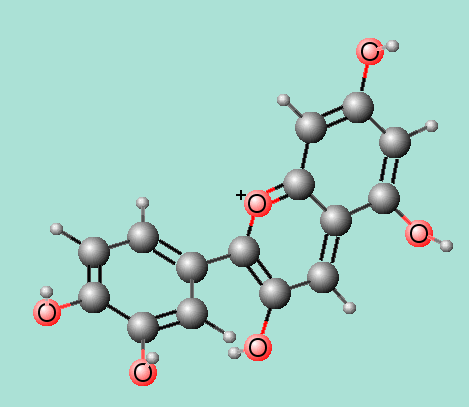
E163F
E163f - Petunidin
✅ Risikostufe: Sicher • Additive
Über diesen Zusatzstoff
Herkunft
Petunidin ist ein natürlich vorkommendes Anthocyanidin, ein Pflanzenfarbstoff aus der Familie der Flavonoide. Es ist in verschiedenen Früchten, Gemüsen und Blumen enthalten und trägt zu deren roten, violetten oder blauen Farbtönen bei. Die spezifische Farbe hängt von Faktoren wie pH-Wert, Temperatur und der Anwesenheit anderer Verbindungen ab. Petunidin wird durch die Glykosylierung von Petunidin-Aglykon gewonnen.Verwendung
Als Lebensmittelzusatzstoff wird Petunidin (E163f) als natürlicher Lebensmittelfarbstoff verwendet. Es kann in einer Vielzahl von Lebensmitteln und Getränken eingesetzt werden, um eine rote, violette oder blaue Farbe zu verleihen. Beispiele hierfür sind Fruchtsäfte, Marmeladen, Süßwaren, Milchprodukte (Joghurts, Eiscreme) und Backwaren. Die Stabilität und Farbintensität von Petunidin können durch Faktoren wie pH-Wert, Temperatur und die Anwesenheit anderer Lebensmittelbestandteile beeinflusst werden. Es wird auch auf seine potenziellen gesundheitlichen Vorteile als Antioxidans untersucht.Nebenwirkungen
Anthocyane, einschließlich Petunidin, gelten im Allgemeinen als sicher für den Verzehr. Bei den üblicherweise in Lebensmitteln verzehrten Mengen wurden keine signifikanten Nebenwirkungen berichtet. Wie bei jedem Lebensmittelzusatzstoff können jedoch einige Personen allergische Reaktionen oder Empfindlichkeiten erfahren. Für Petunidin wurde von großen Regulierungsbehörden wie EFSA oder FDA kein spezifischer ADI (Acceptable Daily Intake) festgelegt, was oft auf ein geringes Toxizitätsrisiko bei typischen Verwendungsniveaus hinweist. Studien haben gezeigt, dass Anthocyane im Darm schlecht absorbiert werden, wobei der größte Teil ausgeschieden wird. Weitere Forschungen sind im Gange, um die Langzeitwirkungen einer hohen Anthocyanzufuhr vollständig zu verstehen.Regulierungsstatus
Petunidin ist als Teil der Gruppe E163 (Anthocyane) in der Europäischen Union gemäß der Verordnung (EG) Nr. 1333/2008 über Lebensmittelzusatzstoffe als Lebensmittelfarbstoff zugelassen. Die spezifischen Verwendungsbedingungen und Höchstmengen sind in Anhang II der Verordnung festgelegt. In den Vereinigten Staaten gelten Anthocyane im Allgemeinen als sicher (GRAS) und sind als Farbstoffe zugelassen, obwohl je nach Quelle und Anwendung spezifische Vorschriften gelten können.Quellen
- 📚 EFSA ANS Panel 2013
- 📚 FDA CFR 21
- 📚 Wikipedia
- 📚 PubChem
Kurzinfos
Typ
Additive
Risikostufe
✅ Sicher
Vegan?
✅ Ja
Halal?
✅ Ja