
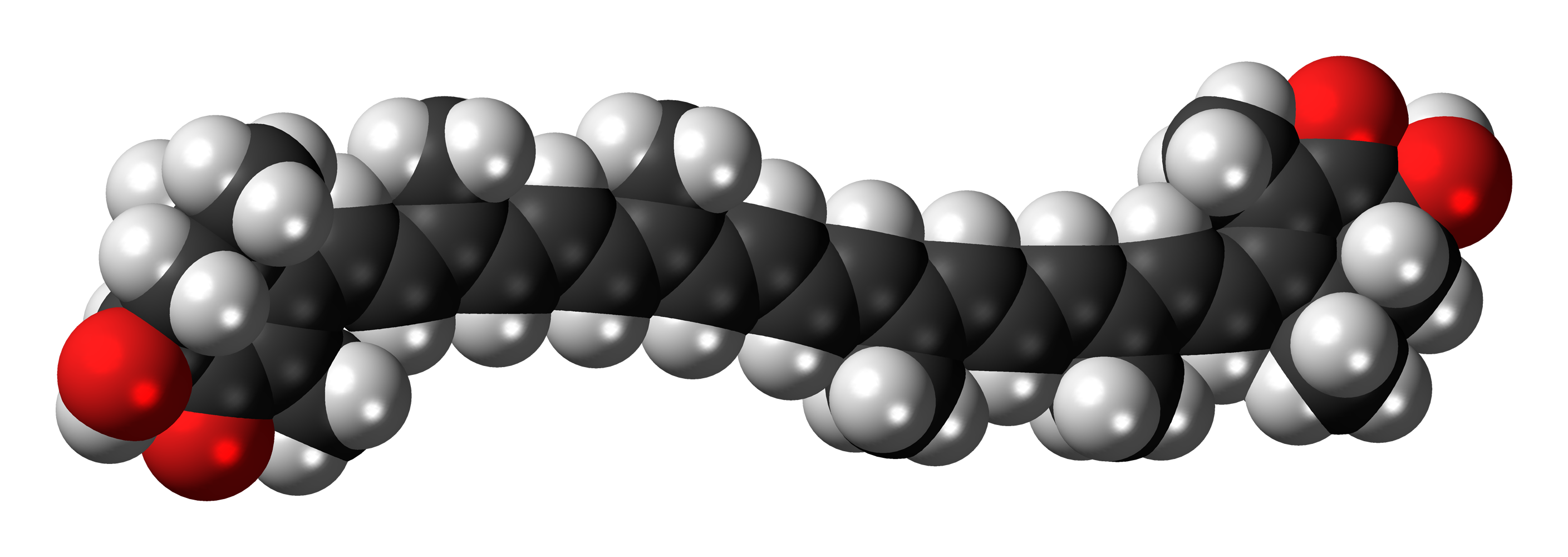
E161J
E161j - Astaxanthine
✅ Niveau de Risque: Sûr • Additive
À propos de cet additif
Origine
L'astaxanthine est un pigment caroténoïde naturel que l'on trouve dans diverses algues, levures, saumons, truites, krills, crevettes et écrevisses. Elle est responsable de la couleur rose ou rouge de ces organismes aquatiques. Commercialement, l'astaxanthine est produite par plusieurs méthodes, notamment la culture de la microalgue Haematococcus pluvialis, la synthèse chimique et la fermentation de la levure Phaffia rhodozyma. L'astaxanthine dérivée de Haematococcus pluvialis est considérée comme une source naturelle et est souvent préférée pour les compléments alimentaires et les applications alimentaires.Utilisation
L'astaxanthine est principalement utilisée comme colorant alimentaire, conférant une teinte rouge-orange. Elle est ajoutée aux aliments pour animaux, en particulier pour l'élevage de saumons et de truites, afin d'intensifier la couleur de leur chair, la rendant plus attrayante pour les consommateurs. Dans les produits alimentaires destinés à la consommation humaine, l'astaxanthine est utilisée dans les compléments alimentaires en raison de ses propriétés antioxydantes. On la trouve également dans certains aliments transformés, tels que les analogues de fruits de mer et certaines boissons, pour améliorer leur couleur. L'astaxanthine fait également l'objet de recherches pour ses bienfaits potentiels sur la santé, notamment ses effets anti-inflammatoires, anticancéreux et protecteurs cardiovasculaires, bien que des recherches supplémentaires soient nécessaires pour confirmer ces bénéfices.Effets secondaires
L'astaxanthine est généralement considérée comme sûre pour la consommation humaine aux niveaux alimentaires typiques. L'Autorité européenne de sécurité des aliments (EFSA) a établi une dose journalière admissible (DJA) de 0.034 mg/kg de poids corporel pour l'astaxanthine dérivée de Haematococcus pluvialis. Des doses élevées d'astaxanthine peuvent provoquer des effets secondaires légers tels qu'une pigmentation rouge de la peau (canthaxanthémie), bien que cela soit généralement inoffensif et réversible à l'arrêt de la prise d'astaxanthine. Certaines personnes peuvent ressentir un inconfort gastro-intestinal, tel que des maux d'estomac ou des modifications du transit intestinal, à des doses élevées. Il n'y a pas d'interactions médicamenteuses significatives connues associées à l'astaxanthine aux niveaux alimentaires normaux. Cependant, les personnes prenant des médicaments devraient consulter leur professionnel de la santé avant de prendre des suppléments d'astaxanthine.Sources
- 📚 EFSA 2014
- 📚 FDA CFR 21
- 📚 Wikipedia
- 📚 PubChem
Informations Rapides
Type
Additive
Niveau de Risque
✅ Sûr
Végane?
✅ Oui
Halal?
✅ Oui